Technical Guide
How to Check SAE Bell Housing Compatibility?
Learn about global SAE standards for marine gearbox and engine connections, bell housing dimensions, and adapter usage.
Short Answer
SAE (Society of Automotive Engineers) standards are the global circular measurement system that ensures the bell housing on the back of the engine and the front face of the gearbox fit together perfectly. Your engine's SAE size (e.g., SAE 3) and your gearbox's mounting flange must be identical. In case of a mismatch, the two units cannot be bolted together. Adapter rings can be used to solve this problem, but this narrows the installation space and increases the risk of misalignment.
Core Components: How Do the Engine and Gearbox Connect?
A marine engine and gearbox are connected at two main points. Both points must match international standards:
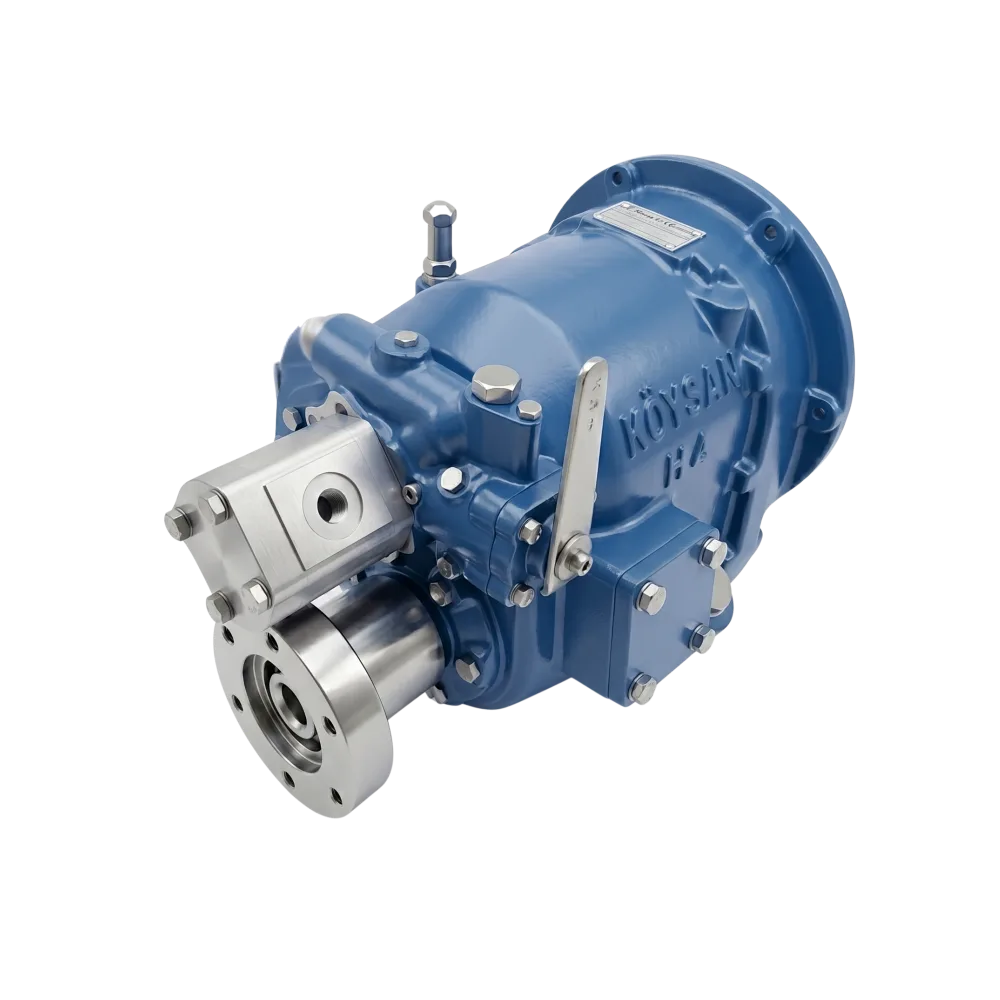
- Outer Shell (Bell Housing): The circular cast housing at the rear of the engine and the front cast flange of the gearbox. They are bolted together to keep the system in perfect alignment.
- Inner Drive (Damper Plate): The spring-loaded disc bolted to the engine's flywheel surface, featuring a splined hole in the center where the gearbox's input shaft will be inserted.
3 Main Factors Influencing Compatibility
1. Bell Housing Diameter and Bolt Pattern
SAE sizes are generally numbered from 0 (largest) to 6 (smallest). In the marine industry, SAE 1, 2, 3, and 4 are the most commonly used. For example, an SAE 3 standard housing has an outer bolt circle diameter of approximately 428 mm (16.875 inches) and 12 bolt holes. If your engine is SAE 3, your gearbox housing must also be manufactured to the SAE 3 standard.
2. Flywheel and Damper Plate Diameter
Even if the outer shell matches, the size of the inner disc that transmits power must also fit the engine's flywheel. SAE standards also determine flywheel diameters (e.g., 11.5 inches, 14 inches). The gearbox input shaft must fit perfectly into the hub in the center of the damper plate, and the spline count and profile must match exactly.
3. Clearance Tolerances
The length of the gearbox input shaft must be compatible with the depth of the engine flywheel. If the shaft is too long, the gearbox will not seat fully against the engine, leaving a gap (tightening the bolts will cause the shaft to bottom out and cause damage). If the shaft is too short, the splines inside the damper plate won't engage sufficiently and will strip under high torque.
| SAE Size | Typical Engine Power | Common Application | Pilot Diameter (Approx.) |
|---|---|---|---|
| SAE 1 | Very High (500+ HP) | Heavy-duty commercial boats, tugs | 511 mm |
| SAE 2 | High (300 - 500 HP) | Large fishing boats, motor yachts | 447 mm |
| SAE 3 | Medium (100 - 300 HP) | Standard pleasure craft, mid-size fishing boats | 409 mm |
| SAE 4 | Low (50 - 100 HP) | Sailboats, small crew boats | 362 mm |
Example Connection Scenarios
Scenario A: Matching an Old Engine with a New Gearbox
- Current System: A 20-year-old, 150 HP diesel engine with an SAE 3 housing.
- Need: A new hydraulic gearbox.
- Selection: When ordering the gearbox, "SAE 3 housing" and "splined input shaft for an 11.5-inch damper plate" are specifically requested. During installation, the two units mate flawlessly in a "plug-and-play" fashion.
Scenario B: Mismatch and Adapter Usage
- Current System: An 80 HP engine with an SAE 4 housing.
- Available Gearbox: A salvaged SAE 3 (larger) gearbox from an old boat.
- Solution: To connect the SAE 4 engine to the SAE 3 gearbox, a steel or cast aluminum adapter ring (flange) is installed between them. However, since this flange pushes the system back a few centimeters, the propeller shaft length and engine mount positions may need to be revised.
3 Common Mistakes During Installation
Frequently Asked Questions
How can I find out my engine's SAE size?
The most guaranteed way is to check the engine's user manual or the manufacturer's records using the serial number. If this data is unavailable, you can measure the widest distance (center-to-center) between two opposite bolt holes on the bell housing and compare it with international SAE dimension charts.
Can I connect a large engine (SAE 2) to a small gearbox (SAE 3) using an adapter?
Mechanically, it is possible to step down a large housing to a small housing (or vice versa) with an adapter plate. However, if the engine produces SAE 2 level power (e.g., 400 HP), it will likely exceed the mechanical torque capacity of a small gearbox with an SAE 3 housing. Before using an adapter, you must ensure the gearbox can support this power.